
Driving with Low Tire Pressure? Risks and What to Do
- Reviewed by Take 5
- 3 min read
- Quick Answers
- Published Sep 18, 2026
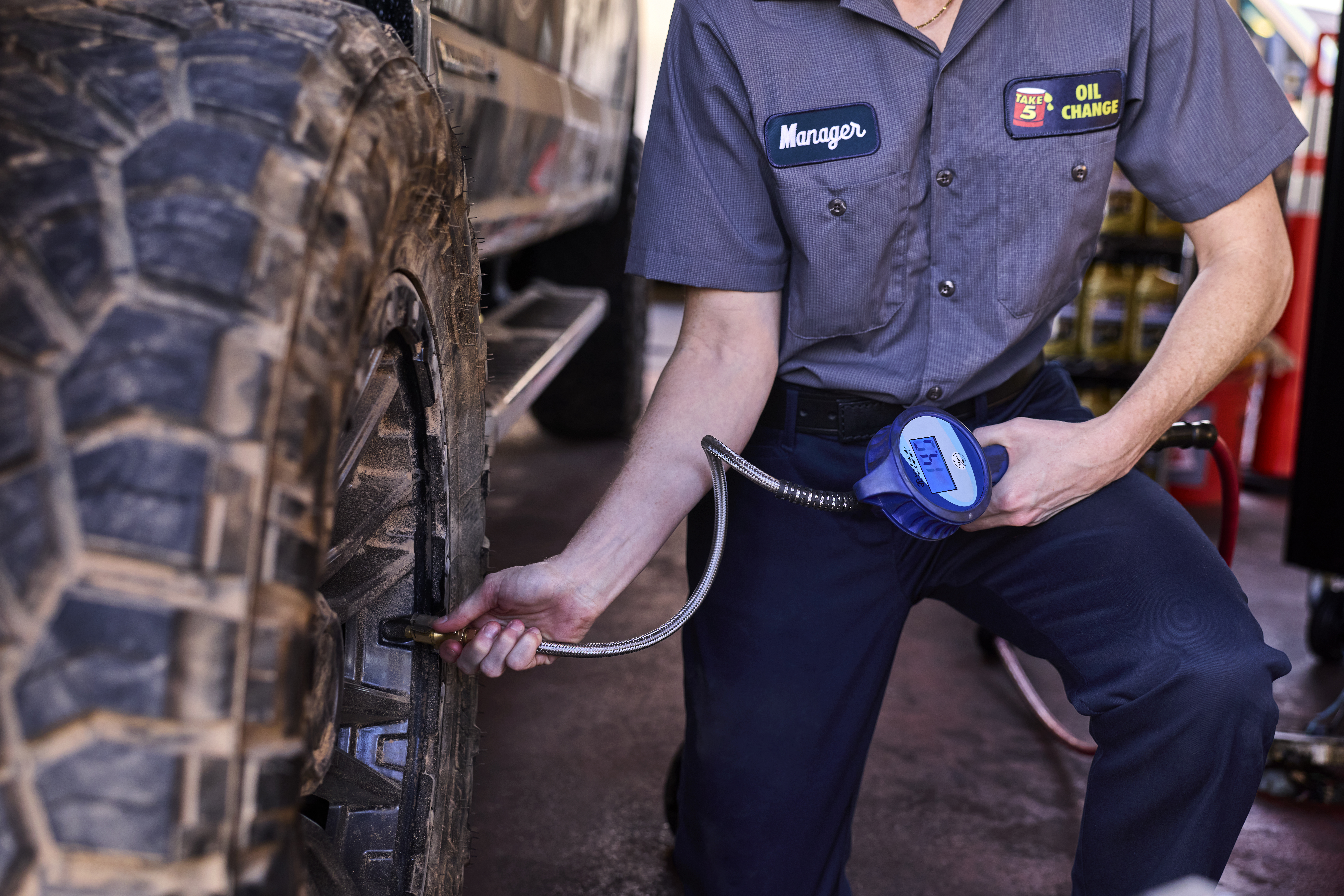
That little tire pressure light popped on again, and you're not sure if it's serious or if it can wait until the weekend. Driving with low tire pressure isn’t something to shrug off, but it’s not a crisis either. It's one of the easiest car problems to fix. You just need to know what to look for, such as poor handling or visible deflation.
What Is Low Tire Pressure?
Your car's target PSI is the tire pressure your manufacturer recommends. Low tire pressure means your tires have dropped below that number, even if they don't look flat. A tire can lose several pounds of pressure and still look fine to the eye, which is part of what makes it easy to miss.
You'll find your target PSI on a sticker inside the driver's-side door jamb. Anything more than a few PSI under your target counts as low, and it's worth checking regularly rather than waiting for a warning light to tell you.
Can You Keep Driving with Low Tire Pressure?
This depends on how low the pressure is and how it's affecting the car. If a tire is only a few pounds under target and everything still handles normally, you can drive carefully to the nearest gas station or Take 5 to add air. Keep your speed down, skip the hard braking and sharp turns, and stay off the highway until it's fixed.
If a tire looks visibly flat, feels significantly underinflated, or the car feels unstable at all, pull over and change the tire before going any further. A tire pressure monitoring system (TPMS) light that comes on and stays lit means get air soon. A TPMS light paired with a sagging tire or a car pulling to one side means stop now, not later.
So yes, you can often keep driving with low tire pressure for a short stretch. Just treat it as a signal to act, not something to put off for another week.
Dangers of Driving with Low Tire Pressure
Ignoring low tire pressure carries real risk, even if the car still drives fine at first.
Stopping distances stretch out. Underinflated tires have less grip on the road, so it takes more distance to bring the car to a stop when you need to react fast.
Your tire's sidewalls also flex more than they should, which makes lane changes and quick maneuvers feel less responsive. You might not notice it in a parking lot, but at highway speed, that sluggishness counts.
On longer drives, the risk climbs. All that extra flexing generates heat, and tires that never get a chance to cool down can build up enough to blow out with little warning.
Hidden Costs of Driving with Low Tire Pressure
Low tire pressure hits your wallet too, in ways that are easy to miss.
Underinflated tires create more rolling resistance, so your engine has to work harder to keep the car moving. That extra effort shows up as worse gas mileage every time you fill up.
Low pressure also throws off how your tire meets the road. Instead of wearing evenly, the outer edges take the brunt of it, and that uneven wear shortens the life of your tires. Replacing tires ahead of schedule for a problem you could've caught early is a frustrating way to spend money.
Why Tires Lose Pressure
Losing a little air over time is normal. It's not a sign something's wrong with your car.
Temperature swings are the biggest factor. Tire pressure drops about 1 PSI for every 10-degree drop in outside temperature, so cooler mornings and seasonal changes can pull your tires below target without you doing anything.
Small leaks add up too. Valve stems wear down over years of use, and tiny punctures from road debris can let air escape slowly enough that you won't notice until the pressure's noticeably low. Even a tire in perfect condition loses a little air naturally over time, since air molecules can pass through rubber.
None of this means your tires are failing. It just means pressure needs a regular check, the same way you'd check oil or wiper fluid.
How to Stay on Top of Tire Pressure
Staying ahead of low tire pressure comes down to one habit: checking it regularly, not waiting for a warning light to do it for you.
Check your pressure at least once a month, and always before a long trip. Don't forget your spare either, since it's easy to overlook until you actually need it. Know your target PSI from the door placard, and top off with air whenever a tire drops below it.
If checking your own tires isn't something you want to add to your list, Take 5 has you covered. Every oil change includes a free tire pressure check and air top-off, and it's part of our state vehicle inspections too. Pair it with a service you're already getting, and it's one less thing to track on your own.
Preguntas frecuentes
Check the sticker inside your driver's-side door jamb, not the number on the tire itself. That sticker lists the exact PSI your manufacturer recommends for your specific vehicle, front and rear.
Yes. Underinflated tires create more rolling resistance, which means your engine burns more fuel to keep the car moving at the same speed. Keeping your tires properly inflated is one of the easiest ways to protect your mileage.
Yes. Every oil change at Take 5 includes a free tire pressure check and air top-off, no extra appointment or added stop needed.