
How Does an Emissions Test Work?
- Reviewed by Take 5
- 3 min read
- Quick Answers
- Published Oct 18, 2026
- Last Reviewed Oct 18, 2026
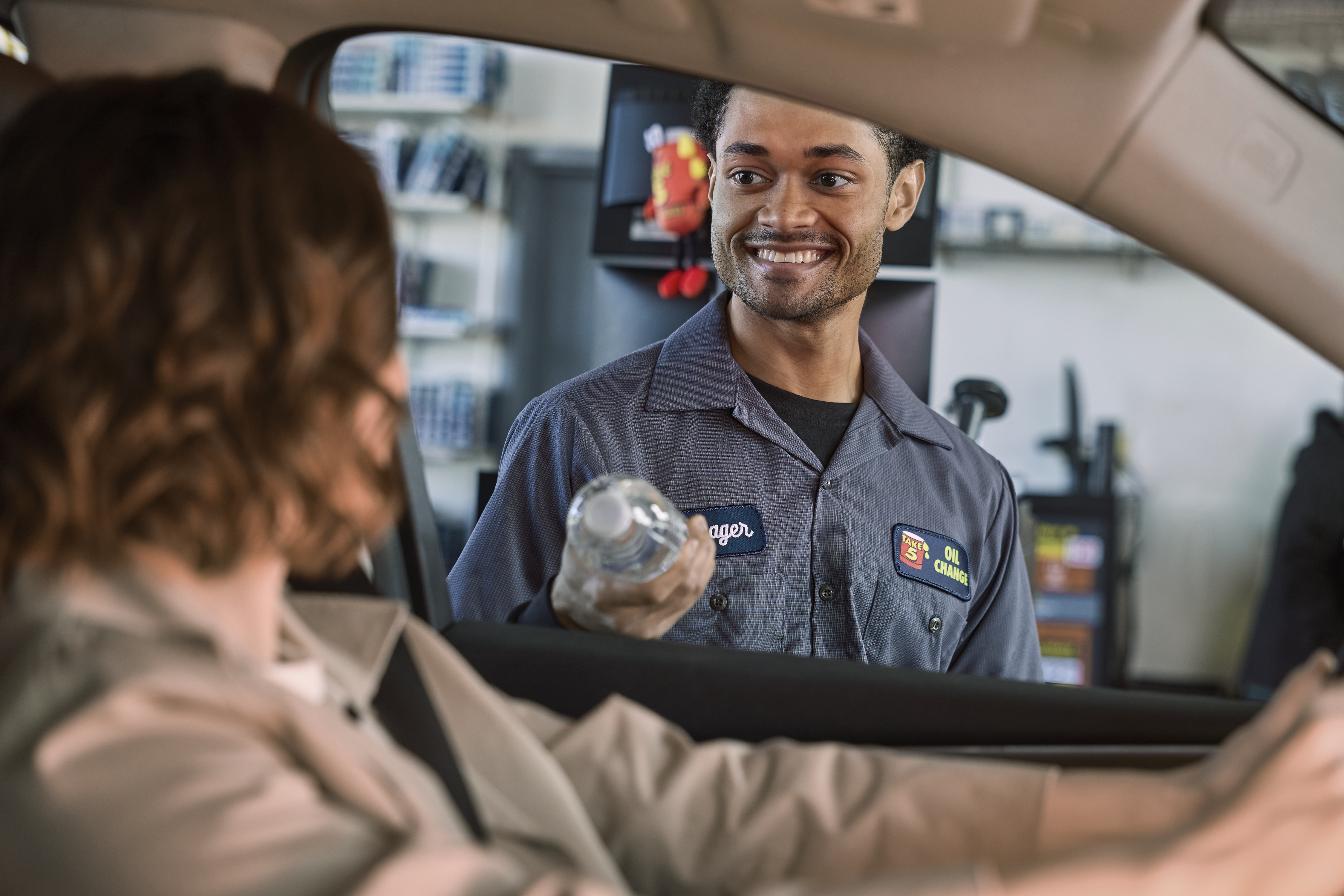
You've got a registration renewal coming up, and an emissions test is standing between you and that little sticker. The good news is it's not as complicated as it sounds. An emissions test checks whether your car meets your state's air quality standards. A technician connects to your vehicle's onboard computer through a small port under the dashboard and reads a report on whether everything is running the way it should. For older vehicles, the technician may test the exhaust coming out of your tailpipe instead.
Either way, it typically takes 15 to 30 minutes (opens in a new tab) or less. Take 5 handles state vehicle inspections and emissions tests (opens in a new tab) at many of our locations — no appointment, no waiting room. A state inspection is a broader safety check of things like your brakes, lights, and tires.
Depending on where you live, your emissions test may be a part of a required inspection or a separate visit. Here's how emissions tests work and what to expect.
What Do They Check on an Emissions Test?
Whether you need an emissions test depends on where you live. More than 25 states require some form of emissions testing. Some test every year, others every two years, and a few exempt newer cars entirely. Your registration renewal notice is the easiest way to find out if you're due. Emissions tests look for pollutants your engine produces when it burns fuel. Depending on the test, that can include:
Hydrocarbons
Carbon monoxide
Nitrogen oxides
Carbon dioxide
In higher concentrations, these contribute to smog, poor air quality, and health problems. This is why states set limits on how much your car is allowed to produce. Your car's computer tracks all of this on its own. The test just reads that data and confirms the numbers fall within your state's limits. If something is off, the test flags it before it becomes a bigger problem.
How Is an Emissions Test Performed?
If you've never had one before, it helps to know what actually happens so there aren't any surprises. Here's how an emissions test works, start to finish:
- 1
Check in: You'll hand over your registration and possibly your insurance card. If you're not sure what paperwork you need, here's a quick guide on what to bring to a car inspection and emissions test (opens in a new tab).
- 2
The computer check: For most cars built after 1996, the technician plugs a scan tool into an OBD-II port under your dashboard. It connects to your car's built-in computer and pulls data on how your emissions systems are performing. The tech isn't diagnosing anything by hand because your car has already been tracking this information on its own.
- 3
The tailpipe check (if needed): Older vehicles that don't have that onboard computer system may get a tailpipe test instead. A probe goes into the exhaust pipe and measures the gases coming out while the engine idles or runs at different speeds.
- 4
Results: You'll get a pass or fail right there. A passing result means you're good to renew your registration. A failing result means something needs attention before you can complete the renewal.
Smog Check vs. Emissions Test: Is There a Difference?
A smog check and an emissions test serve the same basic purpose to confirm your car isn't producing more pollution than your state allows. The difference is mostly regional. "Smog check" is the standard term in California, where the emissions check is part of a more comprehensive inspection program. Most other states just call it an emissions test.
How Long Is an Emissions Test Good For?
In most states, your emissions test results are good for one to two years. The exact interval depends on where you live, and sometimes on your vehicle's age or type. Some states require annual testing. Others test every other year or exempt newer cars entirely for the first few model years.
Your registration renewal notice will tell you when your next emissions test is due. It's worth keeping track of that date, so you're not scrambling to fit it in at the last minute.
What It Means to Pass or Fail an Emissions Test
A passing result means your car meets your state's standards, and you're now clear to complete your registration renewal.
A failing result means something in your emissions system needs attention before you can renew. That sounds worse than it usually is. A failure doesn't always point to a major engine problem. Common causes include a loose or worn gas cap or a faulty oxygen sensor.
If your car doesn't pass, your test report will list the specific reason. Take that report to a trusted mechanic and get a retest once the repair is done. Most of these fixes are straightforward, and keeping up with routine maintenance (and never ignoring that check engine light) goes a long way toward avoiding them in the first place.
Keep Your Car Running Clean with Take 5
Fresh oil, clean filters, and a healthy exhaust system all play a role in keeping your emissions where they should be and helping you pass the test when it's due.
At Take 5, we make it easy to stay on top of the basics. Drive in for an oil change, and we'll have you back on the road in about ten minutes. No appointment. No waiting room. You don't even have to leave your car.
And if your state requires an emissions test or vehicle inspection, participating Take 5 locations can complete them at the same time as your next oil change. Same familiar team, same no-hassle experience — so you're not hunting down an unfamiliar testing station when your renewal notice shows up.
Find a Take 5 location (opens in a new tab) near you and check one more thing off your list.
Frequently Asked Questions
Yes. The tailpipe test measures what's actually coming out of your exhaust. The computer-based test (OBD-II) checks whether your car's emissions systems are all functioning correctly. Your car could be running clean right now but still have a sensor or component that isn't working. If your car's computer has flagged a problem, that's enough to fail the OBD-II check even if your exhaust readings look fine.
Readiness monitors are self-checks your car runs in the background while you drive. They test individual parts of your emissions system, like your catalytic converter and oxygen sensors, and report whether each one is working properly. If your battery was recently disconnected or replaced, those monitors reset and need time to complete their checks again. Until they do, the testing equipment may not have enough data to give you a result, which counts as a failure in most states. The fix is usually simple: drive your car normally for a week or so before your test.
Not exactly. Newer light-duty diesels go through the same computer-based scan as gasoline vehicles. Older or heavier diesel vehicles usually get an opacity test instead, where a meter measures the density of smoke in your exhaust. It still confirms that your vehicle isn't producing more pollution than allowed, but the method is tailored to how diesel engines operate.