
Antifreeze vs. Coolant: What's the Difference?
- Reviewed by Take 5
- 4 min read
- Quick Answers
- Published Oct 16, 2026
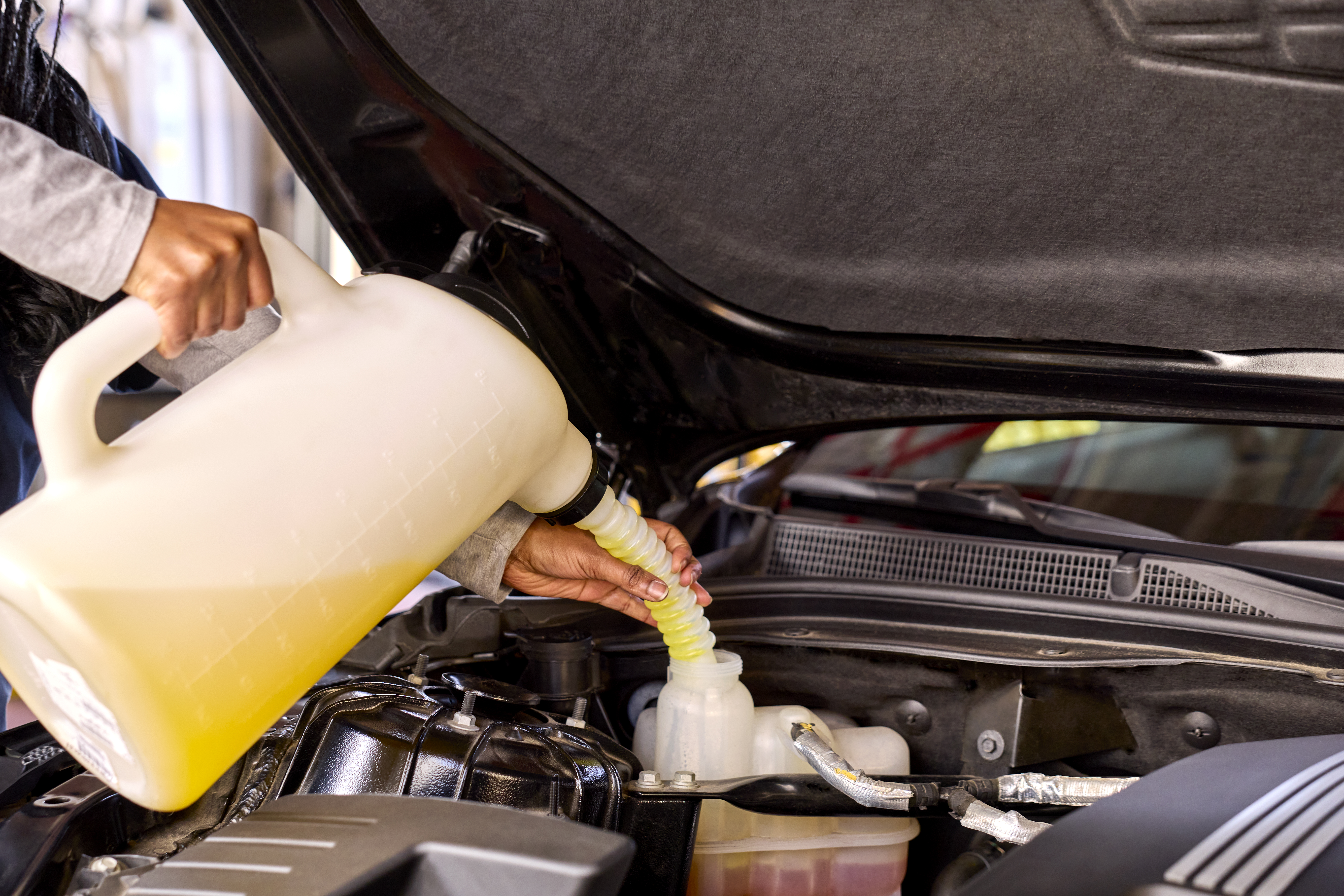
Are antifreeze and coolant the same thing? Close, but not quite. If you've ever stared at two jugs on a shelf wondering which one your car actually needs, you'll want to get it right.
Antifreeze is the concentrated chemical that prevents your engine's fluid from freezing in the winter or boiling over in the summer. Coolant is what you get when you mix that concentrate with water. It's the ready-to-use fluid that actually circulates through your engine and keeps it at the right temperature all year long.
Most people use the two terms interchangeably, and in everyday conversation that's perfectly fine. But when you're topping off your system or grabbing a jug on the way home, the difference matters. The wrong product at the wrong concentration can cause real problems under the hood.
What Is Antifreeze?
Antifreeze is the concentrated chemical that gives your car's cooling system the ability to handle temperature extremes. It's usually made from ethylene glycol, sometimes propylene glycol. It lowers the freezing point of the fluid so it won't turn to ice in winter and raises the boiling point so it won't overheat in summer.
On its own, though, antifreeze is too concentrated to run through your engine. It must be mixed with water before it goes into your cooling system. Skip that step and you can actually reduce its effectiveness and risk damage to your engine's components. You'll notice antifreeze comes in bright colors like green, orange, pink, and blue. That's intentional. Each color signals a different formula designed for specific engines, and using the wrong one can lead to corrosion or clogged passages.
It's also worth knowing that antifreeze is toxic, even in small amounts, so keep it sealed and out of reach of pets and kids. Spills need to be cleaned up immediately, and old fluid should go to a recycling center, not down a drain.
Types of Antifreeze
There are three main types of antifreeze, each built for different engines and cooling system materials:
IAT (Inorganic Acid Technology): The traditional green formula. It's common in older vehicles and needs to be replaced more often, usually every two years or 30,000 miles.
OAT (Organic Acid Technology): Often orange or pink. OAT formulas are designed for newer vehicles and last longer, typically up to five years or 60,000 miles before they need replacing.
HOAT (Hybrid Organic Acid Technology): A blend of IAT and OAT chemistry, usually yellow or turquoise. Many European and Asian vehicles call for HOAT coolant specifically.
If you're not sure which type your car needs, your owner's manual is the fastest answer. And if you'd rather not dig through the glove box, a technician can point you in the right direction.
What Is Coolant?
Coolant is the ready-to-use fluid that actually runs through your radiator and engine. It's antifreeze mixed with water, and it's what your car relies on every day to regulate temperature under the hood. Your engine throws off a lot of heat while it runs.
Coolant circulates through the engine block, absorbs that heat, and carries it to the radiator, where the heat dissipates into the air. Then the coolant cycles back through and does it again. In winter, the antifreeze in the mix keeps that fluid from freezing solid. In summer, it prevents fluid from boiling over.
The most practical thing to know is how engine coolant and antifreeze are labeled at the store. A jug marked "coolant" is usually pre-mixed at a 50/50 antifreeze-water ratio and ready to pour. A jug marked "antifreeze" is typically the concentrated formula, which means you'll need to add water yourself before it goes into your vehicle.
Same core ingredients, different prep levels. Grabbing the wrong one isn't the end of the world, but knowing the difference saves you a step and keeps your cooling system working the way it should.
Antifreeze vs. Coolant: Why the Difference Matters
For everyday conversation, using "antifreeze" and "coolant" interchangeably won't get you into trouble. But when you're buying a product or adding fluid to your car, the difference between engine coolant and antifreeze matters more than you'd think.
Pour concentrated antifreeze straight into your cooling system without mixing it, and you're actually giving your engine less protection, not more. Your engine needs that 50/50 blend of antifreeze and water to regulate temperature properly. Too much concentrate and the engine can overheat. Too much water and you're exposed to freezing temps and corrosion.
The short version: coolant is what your car needs. Antifreeze is one ingredient in it. Knowing that distinction keeps you from using the wrong thing.
When to Replace Your Coolant
Coolant doesn't last forever. The protective additives in the mix break down over time, and as they do, the fluid turns acidic. That acid eats away at hoses, gaskets, and the radiator itself. It's the kind of damage you won't notice until something overheats or starts leaking.
How often you need fresh coolant depends on the type and your engine. Your owner's manual will have the specific interval for your vehicle. Between scheduled changes, a few warning signs tell you something's off:
Discolored or murky fluid: Fresh coolant is bright and clear. If yours looks rusty, muddy, or has particles floating in it, the additives have broken down.
Engine running hot: If your temperature gauge is creeping higher than usual, your coolant may not be doing its job anymore.
Sweet smell under the hood: That faint sugary scent is a telltale sign of a coolant leak, and it's worth getting checked before a small drip turns into a bigger repair.
If any of those sound familiar, don't let it sit on the to-do list too long. A coolant exchange (opens in a new tab) is a quick maintenance item that saves you from a much more expensive headache later.
How Take 5 Keeps Your Engine Cool
If you're not sure what type of coolant your car needs, or you can't remember the last time it was changed, you don't have to figure it out alone. At Take 5, our technicians will check your coolant, tell you exactly what your vehicle needs, and let you know if it can wait. No jargon or upsells.
The whole thing takes minutes, and you never have to leave your car. Pull into the bay, stay in your seat, and watch the work happen right in front of you. It's one more thing crossed off the list without burning half your morning. Ready to get it checked? Find a Take 5 location (opens in a new tab) near you.
Frequently Asked Questions
It depends on what you bought. If the label says "concentrate" or "antifreeze," you'll need to mix it with water before adding it to your system. A 50/50 ratio is standard for most vehicles. If the label says "pre-mixed" or "coolant," it's ready to pour. When in doubt, check the back of the jug or ask a technician.
It's best not to. Different coolant types use different additive chemistries, and mixing them can cause the additives to break down faster or form deposits that clog your cooling system. Stick with whatever type your owner's manual recommends. If you're not sure what's already in your car, a full coolant exchange is the safest way to start fresh.
Yes. Most antifreeze is made with ethylene glycol, which is toxic to people and animals. It has a sweet smell and taste that attracts pets, so spills need to be cleaned up right away. Wear gloves when handling it and keep containers sealed and stored out of reach of kids. Take used coolant to a recycling center or auto shop for proper disposal. Never pour it down a drain or onto the ground.