
High-Mileage Oil Change Comparison: What to Know Before You Go
- Reviewed by Take 5
- 3 min read
- Quick Answers
- Published Oct 6, 2026
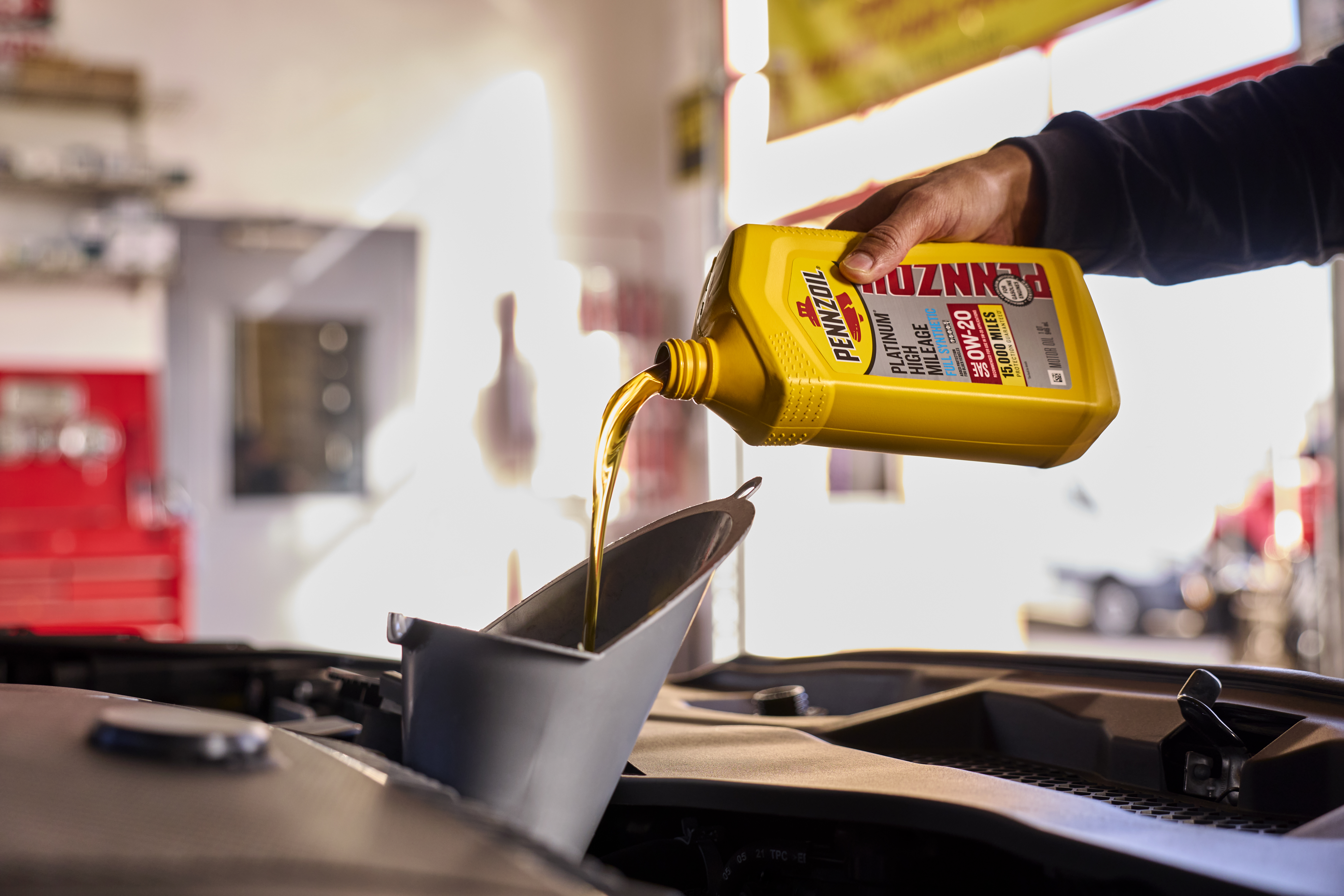
Your oil change light comes on, and this time the tech mentions something new: high-mileage oil recommended. One more line item, one more decision, one more thing wedged into a day that was already full. Is high-mileage oil worth the cost? Where will you get the best deal?
Here's the short version: high-mileage oil is a real upgrade for aging engines, not just a higher price tag with a new label. But what you pay, and how much time it takes, depends a lot on where you go. This high-mileage oil change comparison breaks down your real options, so you can pick the right fit for your car and your schedule.
What Makes a High-Mileage Oil Change Different
High-mileage oil isn't a marketing gimmick. It's built for engines that have logged 75,000 miles or more, and it works differently than standard oil in a few specific ways. The base oil can be conventional, synthetic blend, or full synthetic. What makes it "high-mileage" is the additive package:
Seal conditioners help aging gaskets stay flexible and reduce leaks.
Extra detergents fight the sludge that accumulates in older engines.
Anti-wear agents cut down on metal-to-metal friction as parts wear in.
If your car burns a little oil between changes, shows minor seepage at the seals, or just has some miles on it, high-mileage oil is worth considering. If your engine runs clean and your manufacturer doesn't call for it, standard oil does the job fine. A quick chat with a technician will tell you if you need high mileage oil for your specific vehicle.
Comparing Your High-Mileage Oil Change Options
Once you know you need high-mileage oil, the real decision is where to get your oil change. Here's an honest look at your three main options.
Quick-lube chains (like Take 5) are the middle ground for pricing but differ a lot on experience. There’s no appointment needed, though you'll wait in a lobby while the work happens out of sight. Take 5 skips the waiting room entirely: pull into an open bay, stay in your car, and watch the work happen in about ten minutes.
Retailers handle high-mileage oil changes at their auto care centers, usually without an appointment. How much is a high-mileage oil change at a retailer? Expect pricing to be lower than some other providers, depending on your location and the specific oil grade your car needs. The trade-off is time. During busy hours, you may wait longer than you'd like, and service scope can be narrower than at a full-service shop.
Dealerships use oil that matches your manufacturer's exact specifications, which matters most for newer or luxury vehicles still under warranty. That precision comes at a price. A high-mileage oil change at a dealership is usually the most expensive choice, especially for European or luxury makes. Most dealerships also want an appointment, so it's rarely a same-day errand.
DIY is the cheapest option on paper. But the full picture includes tools, a safe way to lift your vehicle, somewhere to catch the old oil, and a trip to the parts store to dispose of it. Factor in setup and cleanup, and you're looking at the better part of an afternoon. You also skip the second set of eyes a technician provides on your fluids, filters, and tires.
Note: Prices are estimates based on publicly available sources as of August 2026 and vary by location and vehicle.
Comparing Pricing on High-Mileage Oil Changes
High-mileage oil generally costs a little more than standard oil of the same base type, since the additive package adds cost.
A few things move that number more than the type of oil itself. Your car's oil capacity matters: a V8 truck holding seven quarts costs more to fill than a compact sedan holding four. And the oil brand and grade your manufacturer specifies can push the price up or down, especially if your vehicle requires a less common viscosity.
None of these are hidden costs. A good technician will walk you through exactly what your car needs, and why, before any of it hits your bill.
Prioritizing Speed and Convenience
Price only tells half the story. If you're managing a packed schedule, and older cars tend to need service more often, the time an oil change eats out of your day matters just as much as what it costs.
Retailers and dealerships generally mean sitting in a waiting room or dropping your car off and coming back later. Some quick-lube chains cut the wait but still ask you to leave your car in a bay while you wait elsewhere. Either way, you're handing over your keys and hoping for the best.
Take 5 built its whole model around getting that time back. You pull into an open bay, stay in your car, and see every step of the work as it happens. Your tech talks you through it, tells you what your car needs, and skips the stuff it doesn't. Ten minutes, no appointment, no waiting room. Your Saturday afternoon has better plans, and we know it.
Getting the Right High-Mileage Oil for Your Car
High-mileage oil isn't automatically the right call just because your odometer crossed 75,000. Your owner's manual is the first place to check.
Age and condition matter more than mileage alone. A well-maintained car with 90,000 miles and no oil consumption might not need it. A car with 60,000 hard highway miles and a slow leak might benefit from it sooner.
When in doubt, ask. At Take 5, a technician looks at your vehicle's specs, age, and condition every visit and tells you what it actually needs, not just what's on the menu. If your car's a better fit for a full synthetic oil change instead, they'll say so. And if your older vehicle is due for a coolant exchange, they'll flag that too. It’s always up to you if you’d like any additional services. No pressure or upsells from our team.
Skip the price-hunting spiral. Drive in to Take 5 for a high-mileage oil change with the right oil matched to your car's needs.
Preguntas frecuentes
There's no universal cutoff, but 75,000 miles is the general benchmark. What matters more is condition. If your car shows oil consumption, minor leaks, or engine noise as it ages, high-mileage oil often helps sooner than mileage alone would suggest.
Because you're paying for more than oil. Retailers, dealerships, and quick-lube chains differ in labor rates, service scope, and how much time and convenience come with the price. The oil itself, conventional, blend, or full synthetic, affects cost more than the “high-mileage” label does.
Yes. High-mileage oil doesn't lock you in. It's a formulation choice, not a one-way commitment. If your engine's condition changes or driving patterns shift, you can switch back to standard oil at your next change.